The Engineering Excellence of Kronoa Engineered Solutions: A definitive analysis of 2026 pumping and grinding technologies
Contents
The global industrial landscape of 2026 is defined by an uncompromising transition towards circular economy principles, where resource recovery and energy efficiency are no longer optional metrics but core operational mandates. Within this context, the role of fluid handling technology, specifically the management of complex, abrasive, and highly viscous media, has become a focal point for engineering innovation.
Kronoa Engineered Solutions has emerged as a leading engineering provider in this field, leveraging over 25 years of market experience to redefine the performance benchmarks of progressive cavity pumps and grinding systems. By addressing the historical mechanical failures prevalent in legacy designs and integrating European manufacturing standards with advanced modularity, the company provides a technical framework that supports the most demanding applications in wastewater treatment, biogas production, and the chemical industry.
Institutional framework and the evolution of the Premium Line
The foundation of Kronoa Engineered Solutions is built upon a profound understanding of the practical challenges faced by plant operators and engineering teams. With production facilities located in Germany and Spain, and a strategic presence across Europe and Latin America, the company embodies a synthesis of European engineering precision and localized technical support. The mission of the organisation, spearheaded by Managing Director Domingo Serrano, is to provide high-quality solutions that distinguish themselves through ease of maintenance, customised modularity, and a pioneering spirit that prioritises long-term reliability over short-term commodity pricing.
The development of the “Premium Line” represents a significant departure from standard industry practices. While many competitors adapt general-purpose water pump components for specialised sectors, Kronoa has engineered its products from the ground up to withstand the rheological stresses of high-solids media and abrasive slurries. This philosophy is encapsulated in the company’s slogan: “GREEN FUTURE, GREEN HEART, THINK GREEN,” reflecting a commitment to manufacturing energy-efficient pumps that contribute to the sustainability of the facilities they serve.
Strategic Market positioning and economic efficiency
The global market for progressive cavity pumps has undergone substantial expansion, reaching approximately USD 2.68 billion in 2025, with projections indicating a rise to USD 4.45 billion by 2035, according to data from Precedence Research. This growth is largely driven by the increasing demand for efficient fluid handling in water treatment and renewable energy sectors. Kronoa’s market position is defined by its ability to offer a superior quality-to-price ratio. Although the initial investment in a Kronoa pump may be marginally higher in some instances, the total cost of ownership (TOTEX) is significantly lower due to the reduction in unplanned downtime, lower energy consumption, and extended intervals between component replacements.
Economic Indicator
Traditional Pumping Asset
Kronoa Premium Line
Initial Capital Expenditure
Lower (Commodity focus)
Competitive (Quality focus)
Energy Consumption
Higher (Due to hydraulic slip)
Lower (High volumetric efficiency)
Maintenance Intervals
Frequent (Historical design errors)
Extended (Robust architecture)
Downtime Impact
Significant (Difficult disassembly)
Minimal (EDS Technology)
Long-term ROI
Variable
High and Predictable
Sectoral dynamics: Engineering for critical environments
Kronoa Engineered Solutions operates across three primary vertical sectors: wastewater treatment, biogas and waste management, and general industry. Each of these environments presents unique mechanical and chemical challenges that necessitate a tailored engineering approach.
Wastewater treatment and Infrastructure resilience
In the broader European wastewater sector, 2026 presents a landscape characterized by ageing infrastructure, in some regions dating back to the Victorian era, struggling to cope with modern population demands and climate variability. Regulatory reforms, such as those introduced by Ofwat and the Environment Agency, have heightened the penalties for sewage spills and environmental non-compliance. Pumping systems are the primary energy consumers in Wastewater Treatment Plants (WWTP), and even modest efficiency gains can have a substantial impact on a facility’s carbon footprint and operational budget.
Kronoa’s involvement in the wastewater sector focuses on the automation and purification of water purification processes to prevent the pollution of rivers and seas. The Premium Line pumps are designed to handle primary, secondary, and dewatered sludges with high solids content, providing the robust mechanical construction required for continuous operation. The ability to handle abrasive grit and fibrous “rag” without clogging is a critical differentiator that prevents the frequent plant stoppages typical of less robust equipment.
Biogas production and the renewable energy transition
The biogas sector is currently witnessing a rapid expansion as governments seek to enhance energy security and reduce methane emissions. Modern anaerobic digestion (AD) plants must adapt to a wide variety of inputs, including agricultural waste, manure, silage, and food waste. These materials often contain high levels of dry matter and long fibrous substrates that can easily block conventional pumps.
Kronoa has developed specific technical solutions for this sector, moving away from the “historical error” of using water pump components for biogas applications. The integration of the BioCrush system and the Biomix series allows for the effective mixing and dilution of substrates, accelerating the fermentation process and boosting methane yield. By pre-treating the media and ensuring a consistent feed into the digester, Kronoa’s technology supports the stability of the entire anaerobic digestion process.
Industrial and chemical applications
In the general industrial and chemical sectors, the requirement for high-performance pumps that can operate without interruption is paramount. Chemical processes involve media that can be aggressive, corrosive, and highly viscous. Kronoa’s engineering team meets these challenges by adhering to stringent health, safety, and environmental regulations, utilizing advanced materials and coatings to ensure the longevity of the equipment in harsh chemical environments.
Industry Requirement
Pumping Challenge
Kronoa Solution
Municipal Wastewater
Abrasive grit and fibrous “rag”
Hardened “S” geometry rotors
Biogas/AD
Dry matter and long fibres
BioCrush & Biomix technology
Chemical Processing
Corrosive solvents and acids
Halar®/Niflon® coatings
Food & Beverage
Shear-sensitive ingredients
Low-pulse dosing capability
Mining & Slurry
Extreme solid concentrations
Reinforced Cardan transmissions
Mechanical architecture: The anatomy of a high-performance screw pump
The mechanical superiority of the Kronoa Premium Line is derived from a meticulous focus on component interaction and load management. Progressive cavity pumps operate on the positive displacement principle, where the interference fit (often called the “clamp”) between a single-helix rotor and a double-helix stator creates fluid-filled cavities that progress from suction to discharge.
Advanced transmission: The cardan joint advantage
The transmission system is arguably the most critical mechanical assembly within a progressive cavity pump. Most pumps on the market utilize a coupling rod with a standard pin joint, where the entire mechanical load is concentrated on a small surface area, leading to rapid wear and frequent failure. Kronoa has addressed this widespread design flaw by standardising the use of a dual Cardan shaft transmission with needle roller bearings.
The Cardan joint, distributes torque and axial loads over a much larger contact surface. This design effectively significantly reducesthe torsion and point loading that causes metal fatigue in entry-level pumps. Furthermore, the transmission is housed within a reinforced rubber protection sleeve, isolating the needle bearings from the fluid medium and ensuring they remain maintenance-free throughout their operational life.
Hydraulic design and rotor-stator geometries
The choice of rotor-stator geometry directly influences the pump’s durability and energy efficiency. Kronoa predominantly utilizes the “S” geometry, which features a high angle pushing thrust. This geometry guarantees exceptional stability against pressure and superior resistance to abrasion compared to the “Long Pitch” geometries often used by competitors to achieve higher speeds at the expense of component life.
For applications requiring extreme head pressure, the “H” geometry (4-stage design) can achieve up to 24 bar, while the “S” geometry (2-stage design) is optimized for 12 bar (depending on multi-stage configurations) performance with larger solid passage capabilities. The use of advanced elastomers (NBR, EPDM, FKM, HNBR) ensures that the stator is chemically compatible with the media, while high-performance premium alloy rotors (HRC 62-64-Rockwell Hardness C) provide the necessary wear resistance for abrasive slurries.
Bearing housing and mechanical seals
Unlike monoblock pumps, where the reducer bearings must absorb all axial and radial loads produced by the rotor, the Kronoa Premium Line features a robust independent bearing housing with double ball bearings. This architecture isolates the gearbox from the mechanical stress of the pumping action, preventing the fatigue fractures in the reducer that are common in standard designs.
Sealing integrity is maintained through an oil-lubricated mechanical cartridge seal. Unlike traditional seals that are lubricated by the media being pumped, which may contain abrasive grit, Kronoa’s cartridge seal is bathed in a clean lubricant fluid. This design eliminates external springs that could become entangled with hair or fibers, a frequent cause of leakage and fracture in wastewater applications.
Component
Standard Configuration
Kronoa Premium Specification
Transmission
Pin and bush joint
Dual Cardan with needle bearings
Load Handling
Mono-block (Stress on reducer)
Double row bearing support housing
Sealing
Gland packing or simple seal
Oil-lubricated cartridge seal
Drive
Integrated (Proprietary)
IEC Standardised motor/reducer
Protection
Basic paint
Cataphoresis or polymer coatings
Product range: The Premium Line families
Kronoa’s product portfolio is structured into four primary families, each engineered for specific spatial and rheological requirements.
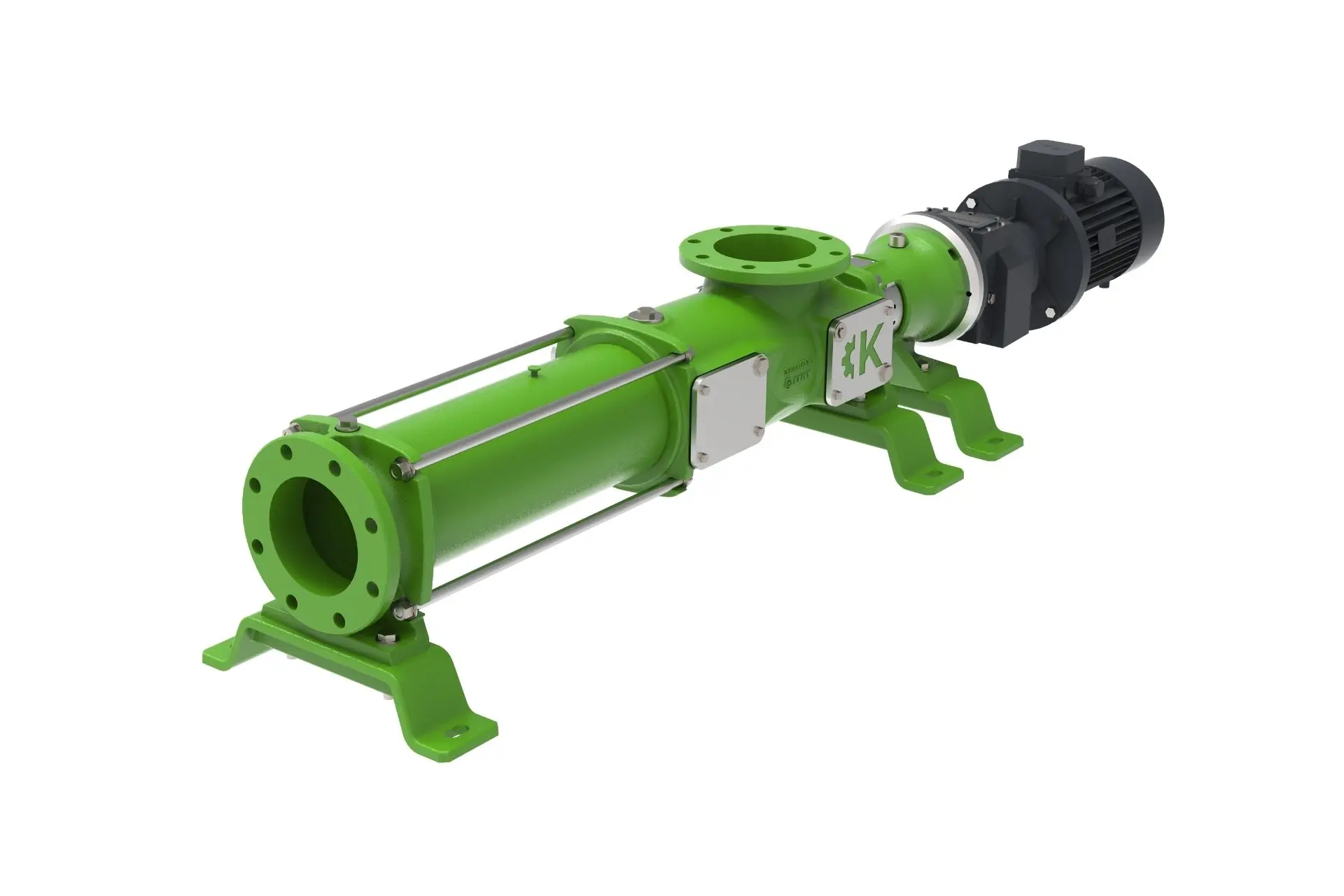
Suction Pumps (Kronoa S Series): Versatile fluid handling
The Kronoa S Series represents the modular standard for suction applications, capable of handling fluids with a suction lift of up to -0.8 bar. These pumps are designed with four inspection ports (two on each side) to facilitate rapid monitoring of the internal mechanics. The Kronoa S Series is ideal for the transfer of sludges, slurries, and abrasive liquids in industrial and wastewater environments, offering flow rates of up to 150 m³/h and pressures up to 36 bar.
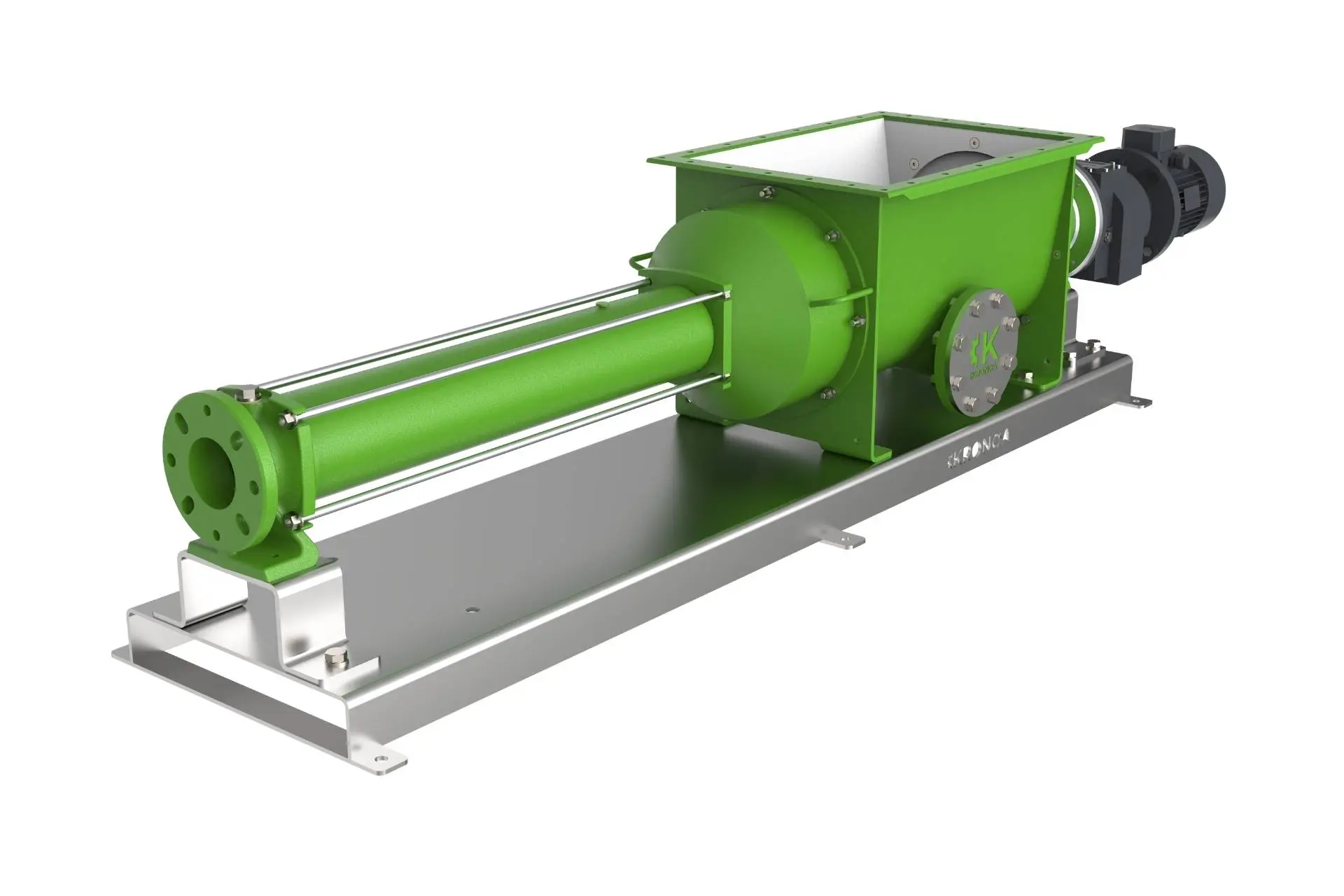
Hopper Pumps (Kronoa H Series): Managing dewatered solids
For applications involving highly viscous and consistent fluids, such as dewatered sludge with up to 40% dry matter, the Kronoa H Series utilizes a large hopper and a force-feed screw. The feeding screw is connected directly to the rotor, and the design features a conical removable tunnel that allows for easy access to the pumping elements without dismantling the entire hopper.
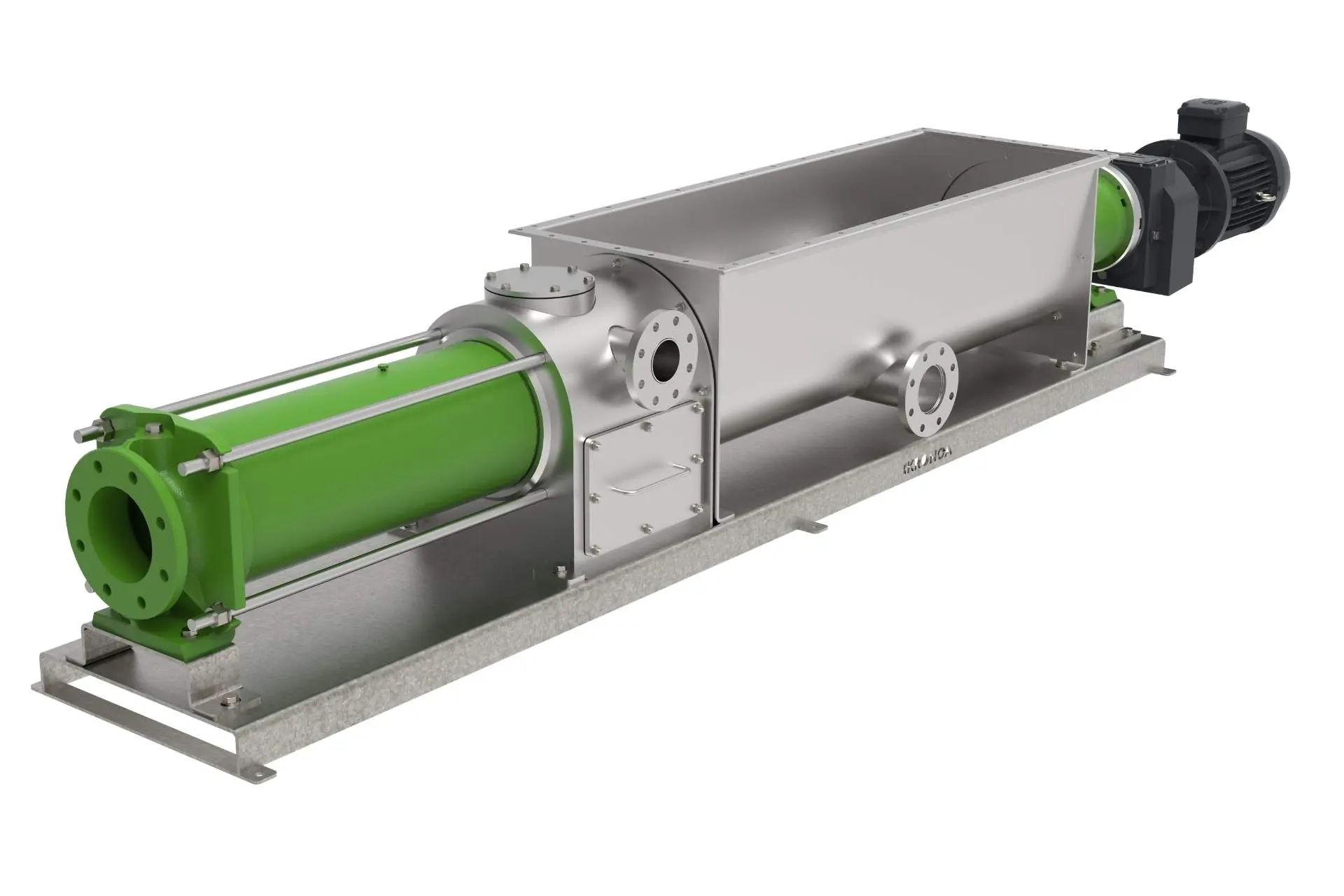
Biomix Pumps (Kronoa Biomix Series): The circular economy core
The Kronoa Biomix Series is a mixing pump specifically designed for co-digestion applications where solid and liquid substrates must be blended prior to entering the anaerobic digester. Capable of processing materials with up to 18% dry matter, it features a Stone Trap decanter integrated into the hopper tunnel to remove heavy contaminants like stones or metal fragments before they can damage the rotor-stator unit.
Vertical Pumps (Kronoa V Series): Deep tank evacuation
The Kronoa V Series is custom-manufactured to match the depth of pits, lagoons, or tanks (up to 5 meters). These vertical screw pumps provide direct suction of the product, making them the preferred solution for emptying reception tanks containing floating greases, slurries, or hydrocarbons.
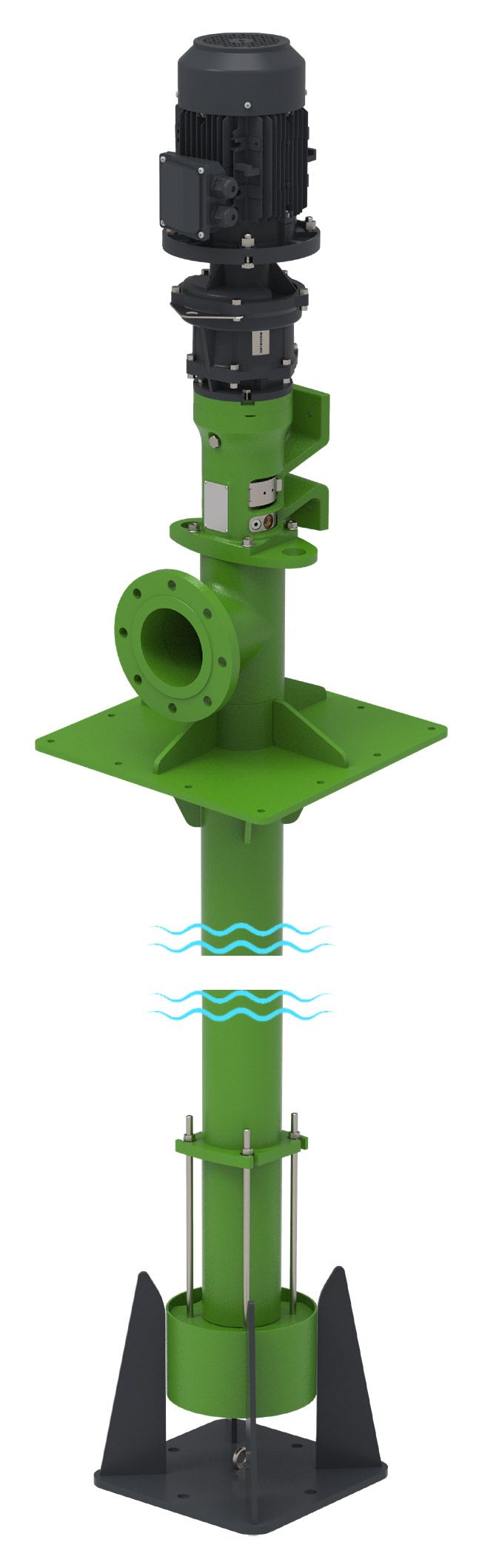
Model Family
Max Flow
Max Pressure
Primary Media
Special Feature
Premium S
150 m³/h
36 bar
Aqueous slurries
Multiport configuration
Premium H
60 m³/h
36 bar
Dewatered cake
Force-feed auger
Premium Biomix
110 m³/h
24 bar
Co-substrates
Integrated Stone Trap
Premium V
100 m³/h
12 bar
Deep pit fluids
Custom shaft lengths
Pre-treatment engineering: Grinders and compactors
Protecting downstream assets and optimizing waste volume are essential components of modern industrial facility design. Kronoa Engineered Solutions provides a range of pre-treatment technologies that complement its pumping systems.
Compact Grinding Systems
Kronoa’s grinders are designed to protect pumps and other equipment from damage caused by large solids such as stones, wood, and textiles. Operating at low rotational speeds, these units generate high torque to grind tough waste without the risk of clogging. The stainless steel housing ensures durability in corrosive wastewater environments, and the modular design allows for installation in channels, manholes, or directly in piping networks.
Waste Shredding and the GRIND-RAX Compactor
The GRIND-RAX Compactor is an integrated system for the screening, washing, and compacting of wet waste. By grinding solids before separation, the system increases the surface area of the waste, allowing the washing process to more effectively remove organic matter and return it to the purification cycle. The final product is a clean, dewatered solid with a volume reduction of up to 90%, significantly lowering disposal costs and odour emissions.
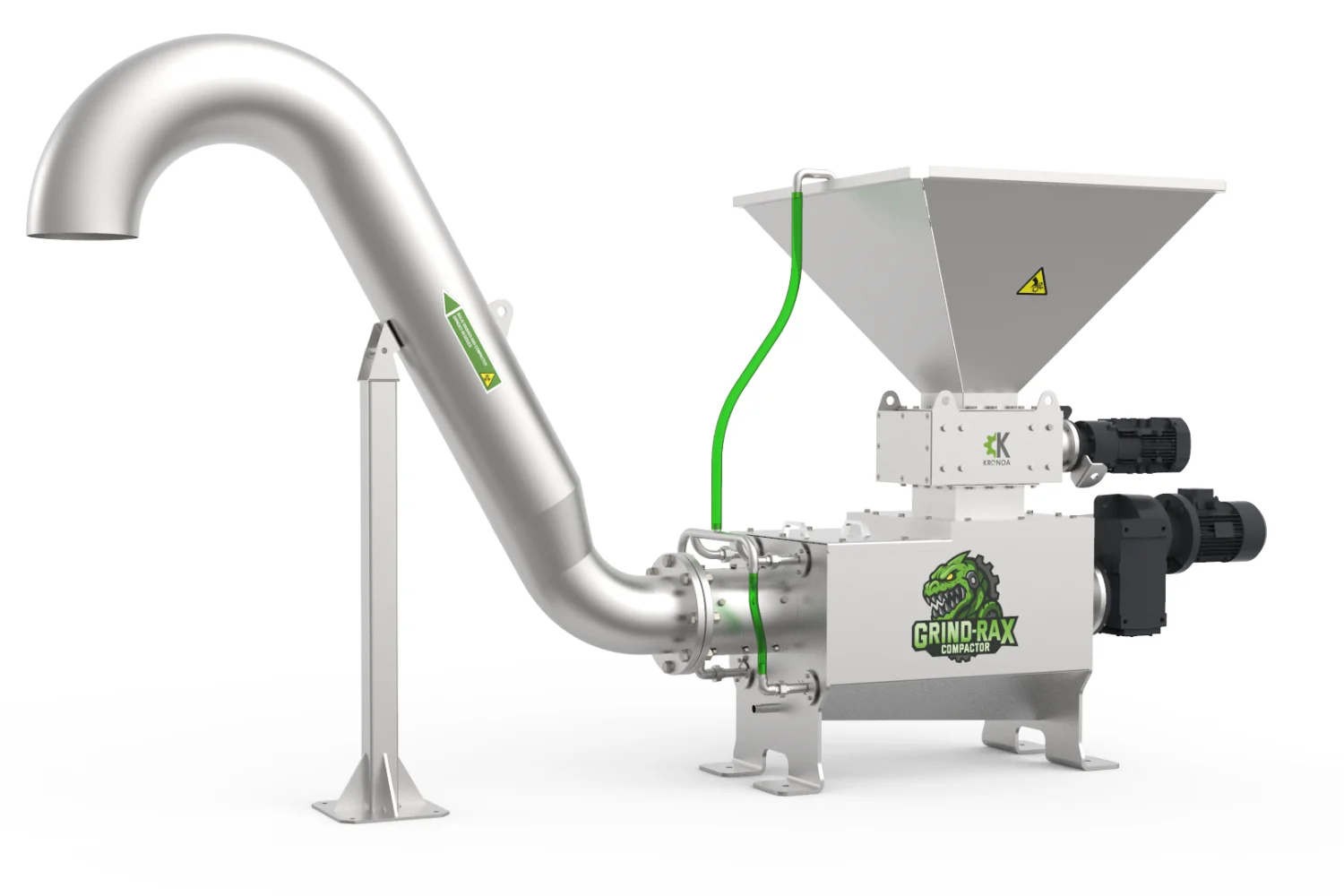
Stage of GRIND-RAX Compactor
Engineering Process
Functional Outcome
Pre-wash & Grind
Initial cleaning and shredding
Maximum organic recovery
Separation
Mechanical isolation of solids
Clean waste stream
Compaction
High-pressure dewatering
90% volume reduction
Discharge
Removal of dry solids
Reduced transport costs
The Easy Disassembly System (EDS) and maintenance philosophy
The value proposition of Kronoa is heavily centered on the reduction of maintenance-related downtime. In industrial environments, the time required to service a pump is often more expensive than the replacement parts themselves. Kronoa’s Easy Disassembly System (EDS) is a suite of design innovations that simplify intervention and reduce the physical footprint required for maintenance.
Quick-access and in-situ repair
The presence of four inspection ports strategically located on the pump casing is a defining feature of the EDS. These ports allow maintenance personnel to inspect the Cardan transmission, the drive shaft, and the mechanical seal without unbolting the pump from the pipework. Furthermore, the drive shaft blocker ensures that the unit remains stationary during maintenance, enhancing safety and precision during the removal of the rotor and stator.
Standardisation and supply chain agility
A critical advantage of the Kronoa Premium Line is the use of completely IEC standardised motor-reducer drives. While many manufacturers use integrated, proprietary motor designs that force the customer to purchase expensive OEM replacements, Kronoa’s use of standard IEC components means that replacements are widely available on the open market at competitive prices.
Kronoa’s logistical agility further reinforces this maintenance philosophy. With production in Germany and Spain, the company maintains a sufficient stock of critical spares (rotors, stators, seals, and joints) and guarantees short delivery times. This contrasts with competitors who often suffer from long lead times, leading to extended and costly plant stoppages.
Maintenance Pain Point
Competitor Legacy Design
Kronoa EDS Solution
Pipeline Dismantling
Required for most repairs
Avoided via inspection ports
Access in Tight Spaces
Extremely difficult
Simplified modular access
Drive Replacement
High cost (Proprietary)
Fair price (IEC Standard)
Part Availability
Long lead times
Local stock & quick delivery
Safety Risks
Rotating shafts during repair
Integrated shaft blocker
Automation, control, and digitalization in 2026
The industry’s push towards digitalization, or Industry 4.0, is integrated into Kronoa’s accessory and control portfolio. As smart operations become the norm, the ability to monitor pump health in real-time is essential for preventing catastrophic failures.
Intelligent monitoring systems
Kronoa provides advanced instrumentation for the protection and automation of its pumping systems:
- Laser Level Control: Used for force-feed pumps to automate rotation speed based on the actual volume of sludge in the hopper, ensuring energy-efficient operation and preventing overflow.
- Electronic Pressure Control: Monitoring backpressure allows the system to detect blockages or excessive wear on the rotor-stator set.
- Dry-Running Protection: Digital electric microthermostat for measuring the temperature of the pump’s stator. A PT100 sensor detects the temperature, which is displayed on a digital screen.
Control panels and PLC integration
The company’s control panels are configurable for manual or fully automated operation via PLC (Programmable Logic Controller). For grinders, the control units include over-intensity protection that can automatically reverse the rotation to clear a potential clog or stop the unit if a hard solid is detected, protecting the drive and cutting elements from damage. These systems are essential for the un-manned, automated operation required by modern Wastewater Treatment Plants and Biogas facilities.
Materials science and surface engineering
In the handling of abrasive and chemically aggressive media, the surface properties of the pump components are as important as their mechanical design. Kronoa utilizes several advanced coating and material technologies to ensure equipment longevity.
Cataphoresis and corrosion resistance
Kronoa’s casting parts are cleaned and phosphate-coated before receiving a cataphoresis treatment. This organic coating method uses electrical current to deposit paint onto every surface of the product, providing optimal rustproof protection against salt, dirt, and water ingress. This process matches and exceeds original equipment (OE) specifications, increasing the durability of pumps in humid or corrosive environments.
High-performance polymer coatings
For chemical applications where standard finishes would fail, Kronoa offers specialized polymer fluorine coatings:
- Halar®/Niflon®: These thermal polymerization coatings provide a thick barrier (200-1000 microns) with unique chemical and thermal properties, ensuring stability against the most aggressive solvents and acids.
Market differentiation and the challenge to legacy progressive cavity pump manufacturers
The industrial pumping market has long been dominated by legacy brands, however, the 2026 landscape shows a growing preference for technically evolved alternatives that address the inherent flaws of these older designs.
Correcting the "common legacy design limitations" of competitors. Amending traditional design constraints
Kronoa’s value proposition is based on addressing the technical shortcomings identified in competitors’ equipment throughout its history in the sector. By developing specific mechanical improvements, such as the reinforced Cardan joint and the independent bearing housing, Kronoa prevents the premature wear and frequent breakdowns that plague other brands.
Value proposition for engineering and distribution partners
For engineering firms and distributors, Kronoa acts as a strategic partner rather than a mere supplier. The company provides rigorous technical advice from the initial design phase, ensuring that the selected equipment is perfectly matched to the application’s requirements. For distributors, the high reliability of the equipment translates to fewer warranty claims and higher customer satisfaction, while the competitive discount structures and logistical speed facilitate market growth.
Total Cost of Ownership (TOTEX) and sustainability
As energy costs remain volatile in 2026, the focus on pumping efficiency has intensified. Progressive cavity pumps are naturally more energy-efficient than many other pump types for viscous fluids because they provide a constant flow rate regardless of pressure variations.
Energy efficiency and carbon reduction
Kronoa’s focus on optimized rotor-stator geometry and high-efficiency IEC motors contributes to a reduction in electrical consumption. Studies in the water industry suggest that a 10% reduction in pump speed can result in a 30% reduction in energy use when correctly managed via Variable Speed Drives (VSD). Kronoa’s equipment is designed to operate at lower RPMs while maintaining high volumetric efficiency, reducing both energy waste and mechanical wear.
Circular economy and waste recovery
The company’s technology is a cornerstone of the circular economy. By efficiently handling food waste, animal by-products, and wastewater sludges, Kronoa’s pumps and pre-treatment systems facilitate the recovery of energy (biogas) and nutrients that would otherwise be lost to landfill. The “THINK GREEN” philosophy is thus reflected in the tangible environmental outcomes of their installations.
Strategic engineering for the next decade
Kronoa Engineered Solutions has successfully navigated the challenges of the industrial pumping market by combining technical innovation with a deep commitment to operational reality. The Premium Line range addresses the fundamental pain points of plant operators: unplanned downtime, high maintenance costs, and energy inefficiency. By standardising the Cardan transmission, integrating intelligent monitoring systems, and prioritizing ease of maintenance through the EDS, Kronoa has established a new standard for progressive cavity pumps in 2026.
For sectors as critical as wastewater treatment and biogas production, the reliability of a pumping asset is the foundation of the entire process stability. Kronoa’s ability to provide high-quality, European-manufactured solutions with localized support ensures that its clients can meet the increasing regulatory and environmental demands of the modern era. As industries continue to strive for efficiency and circularity, Kronoa Engineered Solutions stands as a vital partner, providing the mechanical strength and engineering insight required for a sustainable industrial future.
Green future, Green heart, Think green.
Progressive Cavity Pump performance starts long before installation: the engineering parameters that really matter
The continuous, reliable displacement of complex fluids is a cornerstone of modern industrial processing. When managing media characterised by extreme thixotropy, high solids content, or abrasive particles, selecting the correct pumping architecture is critical to avoiding structural component fatigue and accelerated internal wear.
Which industries benefit most from progressive cavity pumping systems?
The continuous, reliable displacement of complex fluids is a cornerstone of modern industrial processing. When managing media characterised by extreme thixotropy, high solids content, or abrasive particles, selecting the correct pumping architecture is critical to avoiding structural component fatigue and accelerated internal wear.
Progressive Cavity Pump Installation, Service & Lifecycle Support: Why Kronoa is more than a pump supplier
Progressive Cavity Pump Installation, Service & Lifecycle Support: Why Kronoa