Progressive Cavity Pump Design for abrasive and high-solids fluids: engineering reliability into every component
Table of Contents
Premature stator wear, transmission failures and excessive maintenance costs remain among the leading causes of downtime in progressive cavity pumps operating with abrasive, high-solids and non-Newtonian media. In industries such as municipal wastewater treatment, anaerobic digestion and chemical manufacturing, pumping systems rarely handle clean or homogeneous fluids. Instead, they operate continuously with highly thixotropic products, elevated dry matter contents and abrasive solid particles that place constant mechanical stress on every internal component.
Standard pumping solutions often struggle under these demanding operating conditions due to accelerated internal wear, excessive mechanical loading and premature component fatigue. Overcoming these operational bottlenecks requires an evolved approach to progressive cavity pump design, one that moves beyond generic water-pump adaptations and focuses on heavy-duty material science, optimized hydraulics and robust structural architecture.
Fluid rheology and mechanical stress: identifying the root causes of failure
The performance and service life of any Progressive Cavity Pump (PCP) are directly influenced by the physical characteristics of the pumped media. When handling challenging industrial fluids, understanding their rheological behaviour is essential for selecting a pump capable of delivering long-term reliability.
- High-viscosity substrates: Dewatered sludge, digestate and agricultural co-substrates, often reaching dry matter contents of up to 40%, generate high hydraulic resistance and significantly increase the torque transmitted through the pump transmission. As viscosity increases, so do the mechanical loads acting on every rotating component.
- Abrasive media: Sand, grit and crystalline industrial by-products continuously act as grinding agents inside the pumping chamber. Over time, these abrasive particles accelerate wear on the rotor, stator and transmission components, progressively reducing pumping efficiency and increasing maintenance requirements.
- Solid-laden media: Large or unpredictable solid particles present an additional challenge. Besides restricting the flow path, they can generate sudden mechanical overloads capable of damaging conventional transmission systems that are not specifically designed for heavy-duty operation.
At Kronoa Engineered Solutions, our more than 25 years of field experience have shown that many premature failures originate from legacy design concepts rather than from the pumping principle itself. Fragile pin joints, insufficiently protected mechanical seals and conventional transmission systems frequently become the weakest points in demanding industrial applications.
The Kronoa Premium Line has been developed to overcome these limitations through targeted technical evolution, combining robust mechanical architecture with engineered materials specifically selected for abrasive and high-viscosity applications.
Core components of an evolved Progressive Cavity Pump design
Long-term reliability is not achieved by a single component, but by the way every element inside the pump works together to distribute loads, minimise wear and withstand continuous mechanical stress.
1. Hardened rotor and optimized "S" Geometry
The hydraulic heart of every progressive cavity pump is the interaction between the helical rotor and the elastomeric stator. This sealing interface determines not only the pump’s volumetric efficiency but also its ability to handle abrasive media over extended operating periods.
In abrasive applications, conventional Long Pitch geometries may increase local fluid velocity, accelerating abrasive wear under certain operating conditions.
Kronoa’s Progressive Cavity Pump design utilizes an optimized “S” Geometry with a high-angle pushing thrust. This engineered configuration creates a significantly larger free solid passage while operating at lower internal rotational speeds, allowing solids to move more smoothly through the pumping chamber while reducing unnecessary mechanical stress.
To maximise durability, every rotor is precision-machined from high-grade chromium alloy steel. Its ultra-hard surface offers exceptional resistance against scratching and abrasive particles, helping preserve the rotor-stator sealing line and maintain stable volumetric efficiency throughout its service life.
Maintaining stable hydraulic conditions also contributes to reducing internal slip while supporting consistent pumping performance across demanding operating conditions.
2. High-performance stator elastomers
The stator is one of the most critical wear components in any Progressive Cavity Pump. Throughout its operating life, it must maintain continuous contact with the rotor while withstanding friction, pressure fluctuations and chemical exposure from aggressive process media.
Applications such as wastewater treatment, anaerobic digestion and chemical processing often involve fluids containing volatile fatty acids, hydrocarbons or industrial solvents capable of accelerating elastomer degradation. Selecting the appropriate elastomer is therefore essential to maximise service life and maintain consistent pump performance.
Kronoa stators are manufactured from specialized high-density elastomers, including tailored Nitrile Rubber (NBR), carefully selected according to the characteristics of each application. These engineered materials combine excellent elasticity with outstanding tear resistance, allowing the stator to temporarily deform as solid particles pass through the interference fit before returning to its original shape without permanent damage.
The result is a more reliable sealing interface, improved wear resistance and stable volumetric efficiency throughout extended operating periods.
3. Heavy-duty needle-bearing cardan transmission
The transmission is responsible for transferring the motor torque to the rotor while accommodating the eccentric movement that characterises every Progressive Cavity Pump. Under demanding operating conditions, this assembly is continuously subjected to alternating radial and axial loads that can significantly reduce service life if not properly managed.
Many conventional PCPs still rely on simple pin-and-bush joints. When pumping highly viscous products, these joints concentrate forces over very small contact areas, accelerating wear, producing ovalisation of the pins and bushes, and ultimately leading to transmission failure.
To overcome these limitations, the Kronoa Premium Line incorporates a Heavy-Duty Cardan Transmission fitted with grease-lubricated needle roller bearings.
Unlike conventional sliding contact systems, needle roller bearings operate with rolling contact, reducing friction while distributing loads more uniformly throughout the transmission. This contributes to smoother operation under high torque conditions and improves long-term mechanical reliability.
The dual-block Cardan assembly distributes both radial and axial forces evenly within a reinforced transmission chamber, significantly reducing torsional stress concentrations and extending transmission service life. At the same time, it protects the standardised IEC motor from unnecessary mechanical loading, helping preserve the overall reliability of the drive system.
Minimising Total Cost of Ownership (TCO) through maintenance modularity
A robust Progressive Cavity Pump should not only deliver reliable hydraulic performance during operation but also simplify maintenance throughout its service life. Fast and straightforward servicing reduces downtime, lowers labour costs and improves plant availability.
The Easy Disassembly System (EDS)
Traditional pump designs often require maintenance teams to disconnect extensive sections of pipework before gaining access to internal components. In many industrial installations, especially where space is limited, these interventions may require several hours, or even days, of downtime.
The Kronoa Premium Line incorporates our proprietary Easy Disassembly System (EDS), specifically engineered to simplify maintenance operations without disturbing the surrounding installation.
Four large lateral inspection ports integrated into the pump housing provide direct access to the internal transmission. This allows maintenance personnel to inspect or disconnect the Cardan Transmission, replace the oil-lubricated cartridge mechanical seal, or remove the rotor and stator assembly directly on site without dismantling the pipeline.
By eliminating unnecessary disassembly work, maintenance operations become faster, safer and considerably less disruptive to plant production.
This maintenance-friendly architecture can reduce labour time by up to 60%, minimise unplanned shutdowns and contribute to a lower Total Cost of Ownership throughout the pump’s operating life.
For applications requiring high suction lift capability, maintaining stable inlet hydraulic conditions also helps reduce the likelihood of cavitation, supporting reliable pump operation under demanding suction conditions.
Industry-specific architectural adaptations
Even the most robust Progressive Cavity Pump will only deliver its full potential when its configuration matches the characteristics of the application. Fluid properties, solids content and installation requirements vary significantly from one industry to another, making pump selection a key factor in achieving long-term process reliability.
Rather than relying on a single universal design, the Kronoa Premium Line has been developed around application-specific architectures, each engineered to optimise performance under different operating conditions.
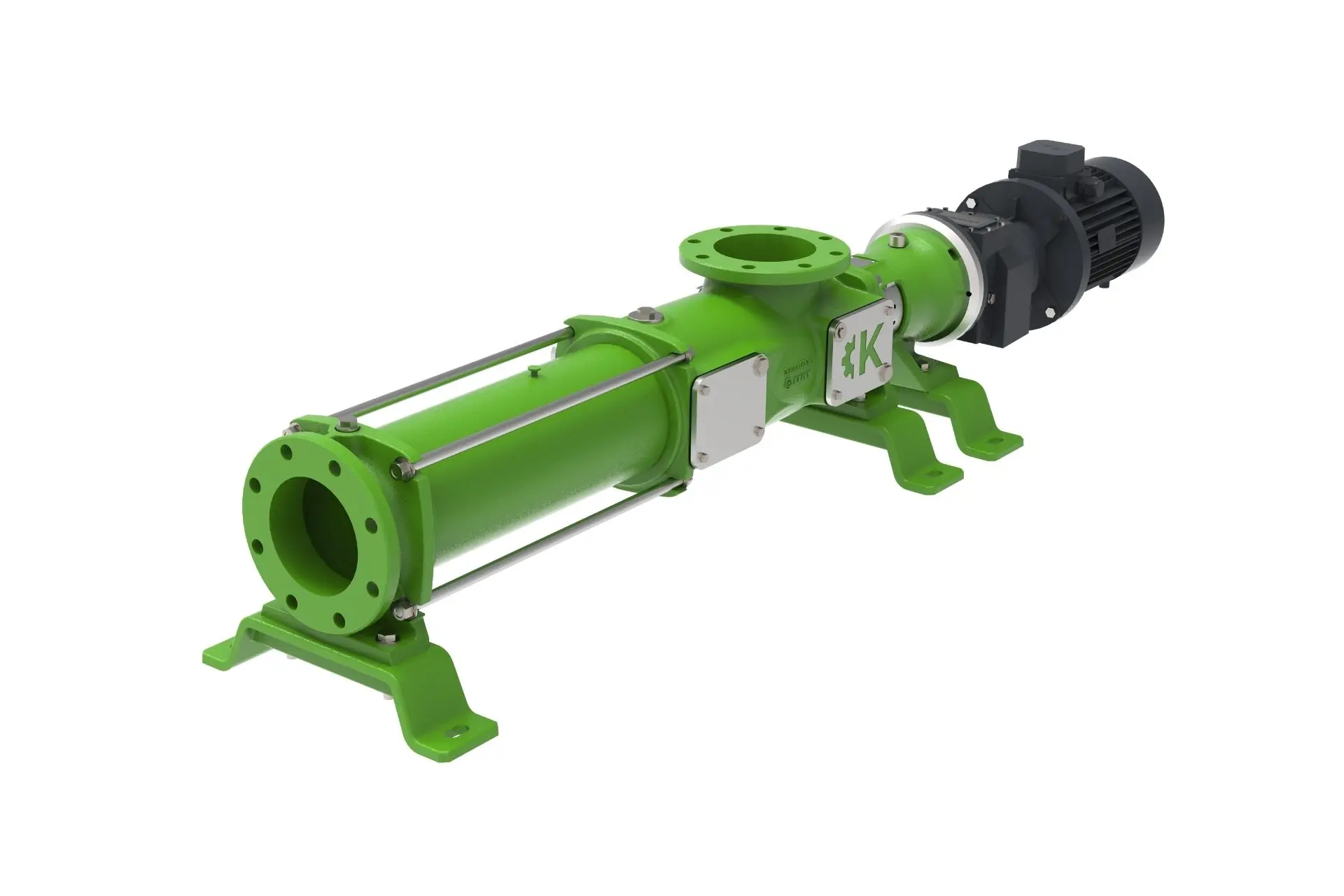
S Series (Suction Line)
The S Series has been specifically engineered for liquid transfer applications where high suction performance and installation flexibility are essential.
With an exceptional suction lift capacity of up to -0.8 bar, the pump is capable of maintaining stable operation even under demanding suction conditions where conventional pumps often experience priming difficulties.
Its optimized hydraulic design helps maintain favourable inlet conditions, reducing the likelihood of cavitation while supporting consistent pumping performance. Combined with a compact footprint and a robust double ball-bearing support housing, the S Series offers excellent reliability for installations where available space is limited.
H Series (Hopper Feed)
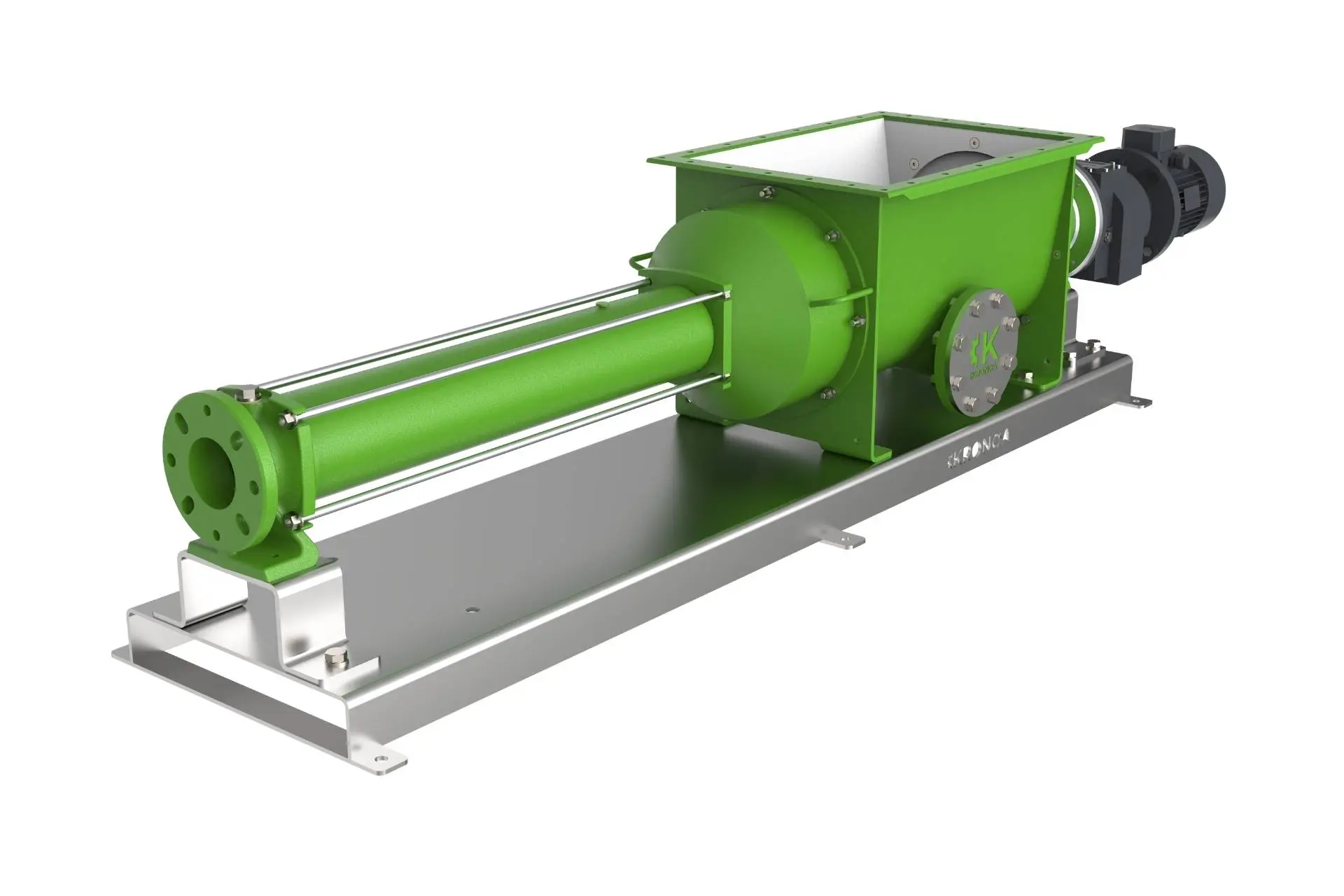
Highly viscous products require more than a conventional suction inlet. Materials such as dewatered sludge, digestate or industrial pastes do not flow naturally into the pumping chamber and therefore require active feeding.
The H Series has been specifically designed for these demanding applications by integrating a large rectangular hopper together with a heavy-duty feed screw. This engineered configuration continuously forces dense media into the rotor-stator assembly, ensuring a stable product supply while reducing the risk of bridging or material starvation.
The result is smoother product transfer, improved operational stability and reliable pumping performance even when handling high dry matter contents.
Biomix Series
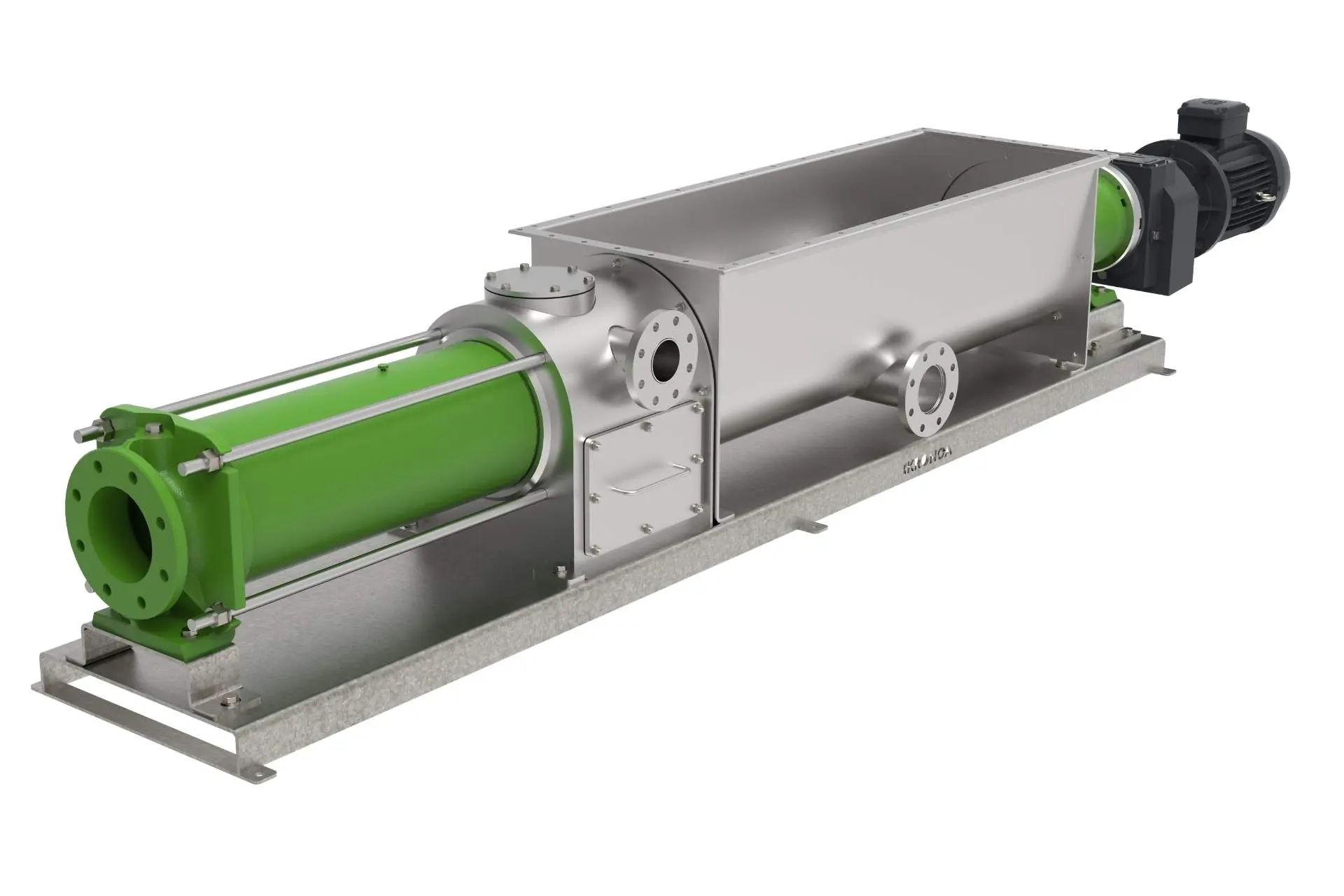
Anaerobic co-digestion plants present one of the most demanding pumping environments due to the wide variety of materials entering the process.
The Biomix Series has been developed specifically for these applications, combining solid organic waste with liquid substrates while protecting the pumping elements against foreign objects.
Its integrated stone decanter trap removes heavy contaminants before they reach the rotor and stator assembly, significantly reducing the risk of premature wear and accidental mechanical damage.
By protecting critical internal components from abrasive debris, the Biomix Series contributes to longer service intervals, lower maintenance costs and improved process continuity.
Selecting the right Progressive Cavity Pump is not simply a matter of choosing the correct flow rate or operating pressure. Long-term reliability depends on how every mechanical component has been engineered to withstand the combined effects of abrasion, viscosity, solids content and continuous cyclic loading.
FAQ
What are the main causes of premature failure in standard progressive cavity pumps?
Premature failures under demanding operating conditions are primarily caused by accelerated internal wear, excessive mechanical loading, and component fatigue. These failures often stem from legacy design concepts, such as fragile pin joints, insufficiently protected mechanical seals, and conventional transmission systems that concentrate stress rather than distribute it.
How does Kronoa's "S" Geometry reduce wear when pumping abrasive fluids?
Conventional “Long Pitch” geometries can increase local fluid velocity, which accelerates abrasive wear. Kronoa’s optimized “S” Geometry utilizes a high-angle pushing thrust that creates a significantly larger free solid passage while running at lower internal rotational speeds. This allows solid particles to move smoothly through the pumping chamber, reducing mechanical stress, friction, and wear.
Why is a heavy-duty needle-bearing Cardan transmission better than a conventional pin-and-bush joint?
When pumping highly viscous fluids, conventional pin-and-bush joints concentrate forces over very small contact areas, accelerating wear, causing pin ovalisation, and leading to joint failure. Kronoa’s Cardan Transmission uses grease-lubricated needle roller bearings operating with rolling contact. This design distributes radial and axial loads evenly within a reinforced transmission chamber, significantly reducing torsional stress, minimizing friction, and extending transmission life.
How does the Easy Disassembly System (EDS) lower maintenance costs and plant downtime?
Traditional pump designs require maintenance teams to disconnect extensive sections of pipework to access internal components, causing hours or days of downtime. Kronoa’s Easy Disassembly System (EDS) features four large lateral inspection ports built into the pump housing. This allows technicians to inspect or disconnect the Cardan transmission, replace the cartridge mechanical seal, or remove the rotor and stator directly on-site without dismantling the pipeline, reducing maintenance labour time by up to 60%.
How does the Biomix Series protect internal pump components in anaerobic co-digestion plants?
Anaerobic co-digestion plants handle a wide variety of materials that often contain heavy foreign objects. The Biomix Series features an integrated stone decanter trap that removes heavy contaminants and abrasive debris before they can reach the rotor and stator assembly, preventing accidental mechanical damage and premature wear.
Green future. Green heart. Think green.
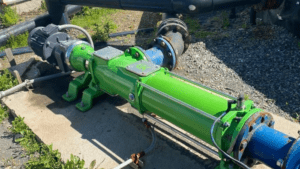
Progressive Cavity Pump performance starts long before installation: the engineering parameters that really matter
The continuous, reliable displacement of complex fluids is a cornerstone of modern industrial processing. When managing media characterised by extreme thixotropy, high solids content, or abrasive particles, selecting the correct pumping architecture is critical to avoiding structural component fatigue and accelerated internal wear.
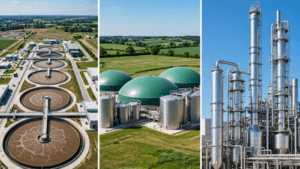
Which industries benefit most from progressive cavity pumping systems?
The continuous, reliable displacement of complex fluids is a cornerstone of modern industrial processing. When managing media characterised by extreme thixotropy, high solids content, or abrasive particles, selecting the correct pumping architecture is critical to avoiding structural component fatigue and accelerated internal wear.
Progressive Cavity Pump Installation, Service & Lifecycle Support: Why Kronoa is more than a pump supplier
Progressive Cavity Pump Installation, Service & Lifecycle Support: Why Kronoa