
Which Industries benefit most from Progressive Cavity Pumping Systems?
Table of Contents
The continuous, reliable displacement of complex fluids is a cornerstone of modern industrial processing. When managing media characterised by extreme thixotropy, high solids content, or abrasive particles, selecting the correct pumping architecture is critical to avoiding structural component fatigue and accelerated internal wear.
Progressive cavity pumping systems operate on the positive displacement principle, where a single-helix rotor rotates within a double-helix fixed stator to create sealed volumetric cavities. This mechanism delivers a relatively low-shear, low-pulsation flow that maintains stable hydraulic conditions even under volatile operating pressures.
However, standard pumping setups often fail when generic configurations are applied to highly demanding environments. Through application-specific engineering, progressive cavity pumps can be adapted to overcome the distinct physical and chemical challenges found across critical vertical sectors.
At Kronoa Engineered Solutions, our commitment to your facility extends far beyond European design and manufacturing excellence. Leveraging more than 25 years of field experience, we have structured our installation frameworks and technical after-sales ecosystem to ensure your progressive cavity pumps deliver maximum hydraulic efficiency, minimized wear, and the lowest possible Total Cost of Ownership (TCO).
1. Municipal and industrial wastewater treatment
Wastewater treatment plants (WWTPs) operate within a challenging mechanical landscape, routinely transferring primary, secondary, and dewatered sludges. The presence of non-homogeneous, high-solids waste streams makes this sector one of the primary beneficiaries of advanced progressive cavity designs.
Managing abrasive grit and fibrous "rag"
Municipal wastewater contains heavy concentrations of sand, grit, and fibrous materials that act as grinding agents inside a pump. Standard water-pump adaptations experience rapid internal slip and casing degradation under these conditions. Evolved progressive cavity pumping systems utilise an optimised “S” Geometry with a high-angle pushing thrust. Operating at lower internal rotational speeds, this configuration provides a larger free solid passage, allowing abrasive grit to pass smoothly through the chamber without scoring the components.
High-solids sludge transfer and dewatering
Dewatered sludge cake does not flow naturally and cannot be drawn into a conventional suction inlet. To manage products containing up to 40% dry matter, specialized hopper feed systems (such as the Kronoa H Series) are deployed. By integrating a large rectangular hopper with a heavy-duty force-feed screw, the dense media is continuously driven directly into the rotor-stator assembly, ensuring a consistent product supply and eliminating material bridging.
Furthermore, because Kronoa pumps are engineered to handle highly viscous media and high-solids substrates, up to 40% dry matter in our H Series, installing proper over-pressure protection valves and dry-running sensors during the installation phase is vital to protect the elastomeric stator from thermal damage.
2. Anaerobic digestion and biogas production
The renewable energy sector relies on consistent process feeding to maintain optimal fermentation rates inside anaerobic digesters. Modern biogas facilities process a diverse and unpredictable diet, including agricultural manure, silage, and organic food waste.
Handling high dry matter and long fibres
Long fibrous substrates present a constant risk of clogging and wrapping around moving parts. Advanced progressive cavity pumping systems resolve this by incorporating pre-treatment and specialized mixing architectures. For instance, mixing pumps (such as the Kronoa Biomix Series) are capable of blending solid organic waste with liquid substrates prior to digestion. These systems feature integrated stone decanter traps that isolate and remove heavy contaminants like stones or metal fragments before they can reach the rotor and stator, which significantly reduces the risk of mechanical damage.
3. Industrial and chemical processing
Industrial manufacturing demands pumping systems that can operate continuously without interruption, often involving fluids that are aggressive, corrosive, and highly viscous.
The Kronoa Premium Line features our proprietary Easy Disassembly System (EDS). Many conventional progressive cavity pumps require maintenance crews to decouple long sections of the pipeline network and slide the suction casing back just to inspect a worn component or replace a mechanical seal.
With the Kronoa EDS, four large lateral inspection ports are built directly into the pump housing. This allows plant technicians to split the internal transmission, replace the oil-lubricated cartridge seal, or extract the entire rotor/stator assembly in situ, without disturbing the suction or discharge pipework. This can significantly reduce maintenance, drastically minimizing plant downtime.
Handling high dry matter and long fibres
Chemical media frequently causes rapid degradation of standard sealing arrangements, leading to leaks and shaft damage. Heavy-duty progressive cavity pumps solve this by utilizing an oil-lubricated mechanical cartridge seal. Unlike traditional seals lubricated by the abrasive or corrosive process fluid itself, the cartridge seal is bathed in a clean lubricant fluid. This architecture eliminates external springs where fibres, solvents, or chemical crystals can accumulate, ensuring long-term sealing integrity and preventing shaft wear.
- Temporary bypass systems: Engineering robust wastewater and fluid bypasses during major tank rehabilitations or collector repairs to ensure environmental compliance.
- Digester and lagoon restorations: Heavy-duty emptying and sediment removal services to restore the active process volumes of biological reactors and anaerobic digesters.
- Blockage management: Integrating advanced grinding technologies and pre-treatment solutions to protect downstream pumping elements from wipes, rags, and dense organic fibers.
Technical evaluation factors: Evaluating drivetrain reliability
When comparing progressive cavity pumping options during the plant design phase, the internal transmission and maintenance access are key differentiators.
The cardan shaft transmission advantage
Many conventional progressive cavity pumps rely on standard pin-and-bush joints. Under high-torque industrial applications, these joints concentrate the entire mechanical load over a very small surface area, leading to pin ovalisation and rapid failure.
An evolved design standardises the use of a dual Cardan shaft transmission with needle roller bearings. The rolling contact of the needle bearings distributes torque and axial forces uniformly over a significantly larger contact surface, reducing point loading and eliminating the torsional stress concentrations that cause metal fatigue.
Maintenance modularity via the EDS
The time required to service a pumping asset is a critical variable during technical evaluation. Traditional layouts require maintenance teams to disconnect extensive sections of pipework to access internal wear parts.
The integration of an Easy Disassembly System (EDS) solves this via four large lateral inspection ports built directly into the pump housing. Plant personnel can inspect or disconnect the Cardan transmission, replace the cartridge mechanical seal, or remove the rotor and stator assembly in situ without disturbing the surrounding pipeline network, which can reduce maintenance labour time by up to 60%.
FAQ: Progressive cavity pumping systems across industrial sectors
1. Which fluid characteristics indicate that progressive cavity pumping is often the preferred solution over other technologies?
Progressive cavity pumping is specifically engineered for non-Newtonian media that conventional pump technologies cannot handle efficiently. If your process involves high-viscosity fluids (up to 40% dry matter), highly thixotropic products, or media heavily laden with abrasive solid particles and fibrous rag, a progressive cavity system is often the preferred solution to maintain a constant volumetric flow and withstand continuous mechanical stress.
2. How do progressive cavity pumps handle changes in fluid viscosity within wastewater applications?
Unlike centrifugal pumps, where a change in viscosity may cause significant hydraulic slip and a drop in flow rate, progressive cavity systems operate via positive displacement. The sealed cavities formed between the rotor and stator deliver a constant, non-pulsating flow rate that maintains a nearly constant flow rate across significant viscosity in the thickness or viscosity of primary, secondary, or dewatered sludges.
3. What specific mechanism prevents fibrous agricultural waste from clogging biogas pumps?
To handle long fibres, silage, and organic food waste without clogging, specialized progressive cavity configurations incorporate targeted pre-treatment or open-hopper designs. Systems such as the Biomix Series blend solid organic waste with liquid substrates and feature an integrated stone decanter trap. This mechanically isolates and removes heavy contaminants before they reach the critical rotor-stator unit, preserving process continuity in anaerobic digestion.
4. Can progressive cavity systems safely transfer corrosive solvents and acids in chemical processing?
Yes, provided the pump is configured with appropriate material science and sealing architecture. For aggressive chemical processing, standard assemblies are substituted with specialized polymer fluorine coatings to protect the internal castings. Additionally, utilizing an independent, oil-lubricated cartridge mechanical seal helps isolate critical moving parts from the chemical media, preventing leaks and shaft degradation.
5. Why is maintenance access a critical factor when choosing a pump design for demanding industries?
In high-solids and abrasive applications, components will inevitably require scheduled inspection or servicing. Traditional pump designs require disconnecting extensive sections of pipeline network to reach internal wear parts, resulting in lengthy operational downtime. An evolved architecture featuring an Easy Disassembly System (EDS) utilizes four lateral inspection ports to allow in situ component removal without disturbing the surrounding installation, reducing service labour time by up to 60%.
Green future. Green heart. Think green.
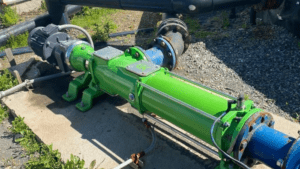
Progressive Cavity Pump performance starts long before installation: the engineering parameters that really matter
The continuous, reliable displacement of complex fluids is a cornerstone of modern industrial processing. When managing media characterised by extreme thixotropy, high solids content, or abrasive particles, selecting the correct pumping architecture is critical to avoiding structural component fatigue and accelerated internal wear.
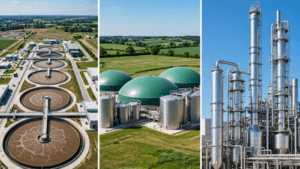
Which industries benefit most from progressive cavity pumping systems?
The continuous, reliable displacement of complex fluids is a cornerstone of modern industrial processing. When managing media characterised by extreme thixotropy, high solids content, or abrasive particles, selecting the correct pumping architecture is critical to avoiding structural component fatigue and accelerated internal wear.
Progressive Cavity Pump Installation, Service & Lifecycle Support: Why Kronoa is more than a pump supplier
Progressive Cavity Pump Installation, Service & Lifecycle Support: Why Kronoa