
Progressive Cavity Pump performance starts long before installation: the engineering parameters that really matter
Table of Contents
Selecting a progressive cavity pump is rarely as straightforward as comparing flow rate and pressure curves. In demanding industrial environments such as anaerobic digestion, wastewater treatment, food processing or sludge handling, pumps often operate with media whose properties change throughout the process. Viscosity fluctuates, solids concentration varies, fibres accumulate and gas entrainment becomes unavoidable.
Under these conditions, the difference between reliable long-term performance and repeated maintenance interventions is usually determined during the engineering phase rather than after commissioning.
This article explores the engineering variables that experienced process engineers evaluate when specifying a progressive cavity pump, and why understanding these factors leads to more stable operation, predictable maintenance and improved process reliability.
Why hydraulic duty alone is not enough
Initial pump selection often starts with a small group of hydraulic parameters, including:
- Flow rate
- Differential pressure
- Fluid temperature
- Viscosity
While these remain essential, they rarely describe the real operating conditions of modern industrial processes.
For example, digestate leaving an anaerobic digester may contain:
- Variable dry solids content
- Long fibrous material
- Gas pockets
- Abrasive mineral particles
- Changes in flow behaviour as the biological process evolves
Similarly, industrial sludge can behave very differently between start-up, steady-state operation and cleaning cycles.
A progressive cavity pump may technically satisfy the required duty point, yet perform poorly if these process characteristics are not considered during specification.
The rotor-stator interface is the heart of pump performance
A conventional progressive cavity pump relies on the interaction between two precision-engineered components:
- The metallic helical rotor
- The elastomer-lined stator
Together they create a series of enclosed progressing cavities that transport product continuously from suction to discharge.
Although the operating principle appears simple, the rotor-stator interface influences many of the pump’s most important performance of the pump, including:
- Volumetric efficiency
- Slip
- Pressure capability
- Energy consumption
- Wear rate
- Ability to handle solids
- Sensitivity to dry running
Even small changes in rotor-stator interference influence sealing efficiency and internal recirculation, particularly when pumping low-viscosity or high-pressure media.
Fluid behaviour is often more important than fluid type
One of the most common specification mistakes is defining a pump according to the product name rather than the product behaviour.
For example, two wastewater treatment plants may both pump “digested sludge”, yet experience completely different operating conditions because of differences in:
- Dry solids concentration
- Polymer dosing
- Sand content
- Fibre length
- Temperature
- Retention time
Likewise, two biogas plants handling digestate may require completely different rotor geometries or elastomer compounds despite transporting nominally the same medium.
Experienced engineers therefore focus on measurable process characteristics rather than generic fluid descriptions.
Abrasiveness is only one part of the wear equation
Operators frequently associate stator wear exclusively with abrasive particles.
In reality, wear mechanisms inside a progressive cavity pump are considerably more complex.
Service life is influenced by the interaction of several variables:
- Abrasive solids
- Chemical compatibility
- Operating pressure
- Pump speed
- Rotor surface condition
- Elastomer properties
- Temperature
- Dry running events
Increasing rotational speed may improve throughput but can also increase frictional heat generation within the stator. Likewise, selecting an unsuitable elastomer for the chemical environment may accelerate degradation even when abrasive content is relatively low.
Elastomer selection is an engineering decision, not a catalogue option
The stator is often viewed as a consumable component, but its material selection has a significant influence on long-term pump performance.
An appropriate elastomer must withstand the combined effects of:
- Chemical exposure
- Temperature
- Mechanical compression
- Abrasion
- Swelling behaviour
For example:
- NBR performs well with many oils but is unsuitable for some aggressive chemicals. Actual compatibility depends on the specific elastomer formulation, chemical concentration and operating temperature.
- EPDM offers good resistance to many chemicals and steam but is generally incompatible with hydrocarbons.
- Other specialised elastomers may be required for particularly demanding industrial processes.
Selecting the correct stator compound therefore requires a detailed understanding of the process medium rather than relying on a standard material specification.
Speed control has a direct impact on reliability
Unlike many centrifugal pumps, in a progressive cavity pump flow rate generally increases in proportion to rotational speed, although actual output is also affected by pressure, viscosity and wear is directly proportional to rotational speed.
This makes variable-speed operation particularly valuable where process conditions fluctuate.
However, speed selection also influences:
- Internal friction
- Heat generation
- Component wear
- Pump efficiency
- Product shear
Running continuously at an unnecessarily high speed may increase wear and maintenance without improving overall plant productivity, particularly when downstream equipment limits the process capacity.
For many industrial applications, selecting the appropriate operating window is more beneficial than simply specifying the highest available capacity.
Maintenance accessibility influences operational availability
Pump maintenance is often evaluated only after installation, yet accessibility should be considered during equipment selection.
Some progressive cavity pump designs provide improved access to wear components, allowing rotor-stator maintenance with less pipework removal. These engineering improvements help minimise production interruptions while making planned maintenance more predictable.
Applications where engineering detail makes the greatest difference
Although progressive cavity pumps are widely used across industry, careful specification becomes particularly valuable in applications involving:
- Biogas digestate transfer
- Thickened sludge pumping
- Dewatered sludge feeding
- Food processing by-products
- Meat processing waste streams
- Chemical slurries
- Lime slurry
- Industrial wastewater
- Highly viscous process fluids
In these environments, media properties frequently evolve over time, making engineering flexibility just as important as hydraulic performance.
Choosing a progressive cavity pump is ultimately a process decision
A progressive cavity pump should not be viewed as an isolated mechanical component.
Its long-term performance depends on how effectively it integrates with the process itself.
A detailed evaluation of these factors supports more stable operation throughout the equipment’s service life. Engineers who evaluate fluid behaviour, operating variability, material compatibility, are far more likely to achieve stable operation throughout the equipment’s service life.
For industries handling abrasive, viscous or solids-laden media, successful pump selection is therefore less about choosing a model from a catalogue and more about understanding the complete process environment in which the pump will operate.
FAQ: Progressive cavity pumping systems across industrial sectors
1. How do fluid characteristics affect progressive cavity pump performance?
Fluid behaviour has a direct impact on pump efficiency, wear and service life. Factors such as viscosity, solids concentration, fibre content, abrasiveness, temperature and gas entrainment influence the interaction between the rotor and stator. For this reason, engineers evaluate the actual operating conditions rather than relying solely on the type of fluid being pumped.
2. Why is elastomer selection so important in a progressive cavity pump?
The stator elastomer determines how well the pump withstands chemical exposure, temperature variations, mechanical stress and abrasion. Selecting an unsuitable material can lead to premature swelling, hardening or excessive wear, reducing volumetric efficiency and increasing maintenance requirements.
3. Can a progressive cavity pump handle changing process conditions?
Yes, provided it has been correctly specified. Progressive cavity pumps can adapt well to changes in viscosity, solids content and flow demand, provided the expected operating range is considered during selection and the pump remains adequately fed. However, these variations should be considered during the engineering phase to ensure the pump maintains stable performance throughout different operating conditions.
4. How does operating speed influence the service life of a progressive cavity pump?
Rotational speed affects more than just flow rate. Higher speeds increase the relative movement at the rotor-stator interface, which can generate more heat and accelerate wear. Operating the pump within an appropriate speed range helps improve reliability, reduce maintenance frequency and extend component life.
5. Which applications benefit most from progressive cavity pumps?
Progressive cavity pumps are widely used in applications involving highly viscous, abrasive or solids-laden media. Typical examples include anaerobic digestion, digestate transfer, sludge handling, wastewater treatment, chemical processing, food manufacturing and other industrial processes where a smooth, low-pulsation flow is essential.
Green future. Green heart. Think green.
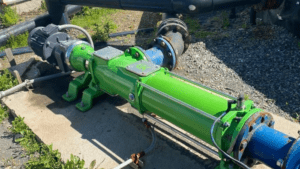
Progressive Cavity Pump performance starts long before installation: the engineering parameters that really matter
The continuous, reliable displacement of complex fluids is a cornerstone of modern industrial processing. When managing media characterised by extreme thixotropy, high solids content, or abrasive particles, selecting the correct pumping architecture is critical to avoiding structural component fatigue and accelerated internal wear.
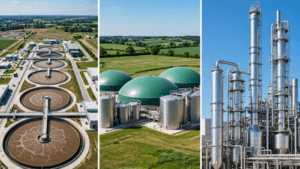
Which industries benefit most from progressive cavity pumping systems?
The continuous, reliable displacement of complex fluids is a cornerstone of modern industrial processing. When managing media characterised by extreme thixotropy, high solids content, or abrasive particles, selecting the correct pumping architecture is critical to avoiding structural component fatigue and accelerated internal wear.
Progressive Cavity Pump Installation, Service & Lifecycle Support: Why Kronoa is more than a pump supplier
Progressive Cavity Pump Installation, Service & Lifecycle Support: Why Kronoa