
Thermal hydrolysis boosts biogas production

May 28, 2024

Numerous experiments have shown that increasing the temperature during treatment can significantly improve sludge reduction and organic release efficiency, and that multiple treatment cycles can also be beneficial, depending on the nature of the treatment.

Many of the most sustainable products contain high levels of woody components, known as lignin and cellulose, which are difficult to break down, limiting the overall efficiency of energy production from these products.

Hydrolysis is the process of breaking down the polymers that make up lignocellulosic material (such as straw and woody biomass) to release molecules – saccharides – thereby improving the efficiency of processes such as anaerobic digestion and fermentation in the production of bioenergy and biofuels.

thermal hydrolysis kronoa

Sludge and thermal hydrolysis

In sewage sludge, the high temperatures also sterilise the raw material, destroying any pathogens that may be present, turning the resulting digestate into a high-quality biofertilizer.

Thermal hydrolysis boosts biogas production

Numerous experiments have shown that increasing the temperature during treatment can significantly improve sludge reduction and organic release efficiency. The higher degradation rate achieved results in higher biogas production compared to feedstock that has not been pre-treated.

This technique consists of super-rapid heating that allows higher hydrolysis temperatures, breaking down more cell structures and making the organic material easier to digest. In an existing line, in a wastewater treatment plant, they would only have to incorporate this technology.

KRONOA’s success case and equipment supplied

Having the knowledge and expertise to supply equipment that is designed and manufactured with those materials that will make it possible to carry out thermal hydrolysis to boost the production of biogas is paramount. And at Kronoa, we can lend you a hand to make your project a success.

Dewatered sludge is the largest potential energy source in a wastewater treatment plant, and therefore should be used as efficiently as possible. In recent years, thermal hydrolysis has been recognised as one of the most efficient pre-treatment solutions to improve anaerobic digestion.

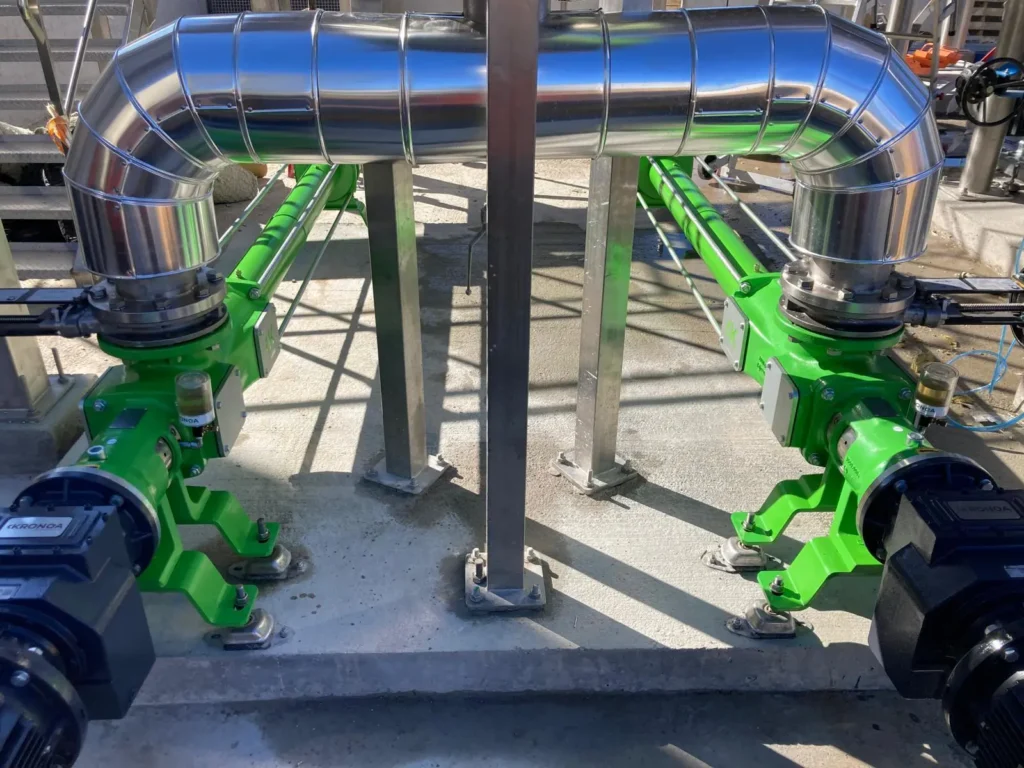
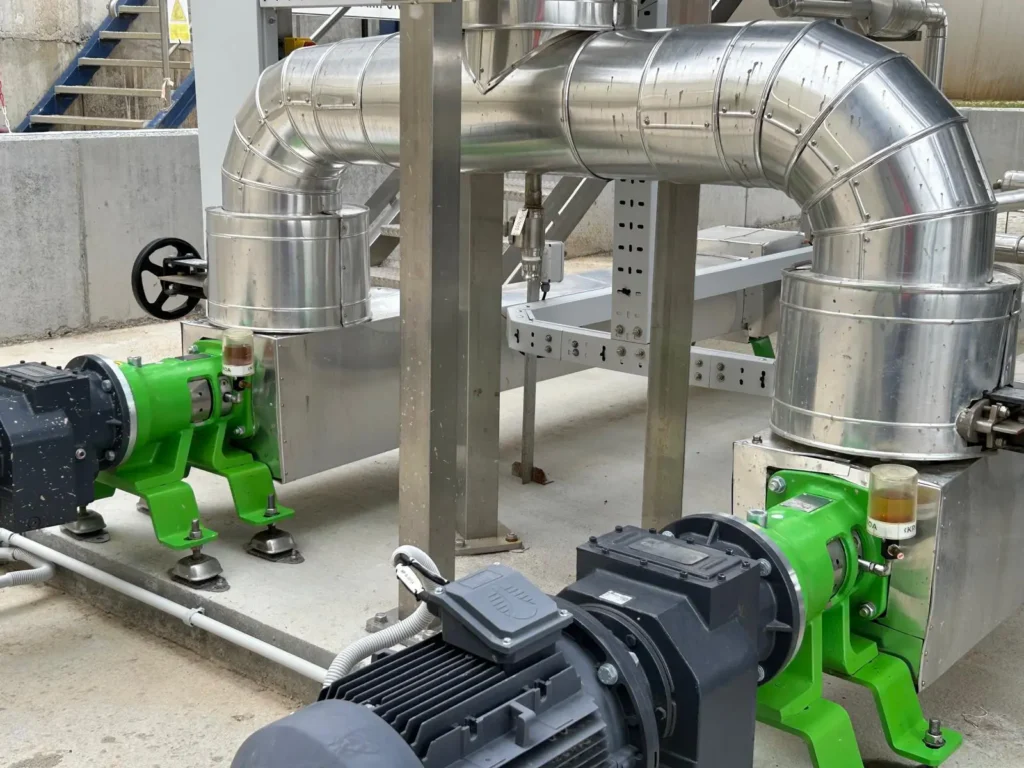
In the south of Spain, a number of pumps to a wastewater treatment plant near an area of over 500,000 inhabitants were supplied by Kronoa. In this particular case, thermal hydrolysis was applied to the treatment of sludges.

The benefits were extensive: 35% more biogas production, 50% less biosolids, and twice as much digester load.

We supplied:

– Forced feed pumps to feed the silos, flow rate adjustable from 2 to 6.4 m3/h at 8 bar and 16% dryness.
– Suction pumps: sludge service to post-digestion sanitising, from 6 to 20m3/h, at 2 bars and with temperatures of 75-80 degrees.
– Hydrolysed sludge outlet pumps: from 2.8 to 9 m3/h at 2 bar. Operational temperature from 100ºC to 110ºC.

All the pumps were configured to work under the conditions established in the project, both in terms of flow, temperature, and pressure, obtaining a magnificent result for these harsh operating conditions.

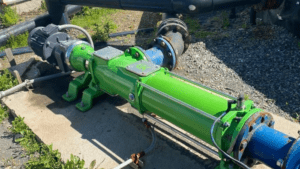
Due to the special operating conditions, high fluid viscosity, high temperature and presence of abrasive solids, Kronoa HT series progressive cavity pumps have been designed to minimise unexpected production downtime.

Extreme temperature conditions of up to 135°C and pressures of 10-12 bar require the use of specially designed progressing cavity pumps, where the quality of the elastomer and its expansion, the machining of the rotor and an efficient sealing system of the pump shaft must be considered.

Thermal hydrolysis biogas production

KRONOA ENGINEERED SOLUTIONS: Our pump design and thermal hydrolysis

At Kronoa Engineered Solutions we have a new and unique sealing system, prepared for the most severe applications and operations. After multiple prototypes and tests, we opted for a cartridge mechanical seal, lubricated in non-toxic oil, balanced, capable of withstanding up to 150ºC and pressures of up to 23 bar. 

The existence of a strong transmission that can endure the fluid’s passage for an extended amount of time would be equally crucial. Kronoa still uses a sturdy cardan shaft system that is equipped with needle bearings and made to function even in extremely harsh conditions.

To ensure rapid intervention in thermal hydrolysis plants, Kronoa pumps are equipped with 4 large inspection and registration covers, from which the rotor or the mechanical seal cartridge can be quickly removed. The same applies to the Kronoa H hopper versions, which are common in these plants for the recirculation of sludge from the pre-heater, or at the beginning of the process, as a feed pump to the process of the stored sludge.

The Kronoa H series pumps with forced feeding system have a removable tunnel from which the rotor can be accessed, leaving the entire pump body uninstalled from its location.

Logo Kronoa Engineered Solutions

Green future. Green heart. Think green.

Facebook
Twitter
LinkedIn