
The Technology behind robust biogas pumps: Types and evolved engineering advancements
Table of Contents
Anaerobic digestion and biogas production are central to circular economy frameworks and industrial resource recovery. However, navigating the conversion of organic waste into renewable energy presents significant operational challenges. At the heart of process stability lies the fluid-handling infrastructure, where robust pumps must constantly transfer highly viscous, multi-phase, and abrasive substrates like agricultural manure, food waste, and dense digestate.
In this technical guide, we explore the mechanical architecture that defines a truly robust biogas pump, addressing legacy design flaws and highlighting the latest advancements in Progressive Cavity Pump (PCP) engineering that optimise the Total Cost of Ownership (TCO).
The core technology: evolved Progressive Cavity Pumps
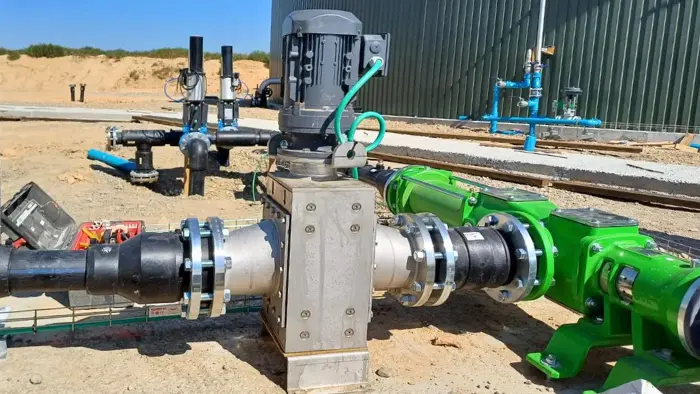
Most heavy-duty biogas installations rely on the positive displacement mechanics of Progressive Cavity Pumps (also known as eccentric screw pumps). Unlike centrifugal alternatives that shear the media and fail under high gas volume fractions or varying viscosity, a PCP utilises a single helical rotor rotating inside a fixed, elastomeric stator.
This interaction forms sealed pockets that move volumetrically from the suction side to the discharge side. The resulting smooth, low-shear flow protects the structural integrity of biological substrates while delivering powerful suction lifts (down to -0.8 bar) and high-pressure capabilities (up to 36 bar), which are vital for feeding tall anaerobic digesters.
Building real robustness: key design features
Many standard pumps fail prematurely in biogas plants because they are originally designed for water-like mediums and only lightly adapted for more demanding conditions. True engineering excellence requires a purpose-built architecture designed from the ground up for high-solids, abrasive and fibrous agricultural co-substrates.
1. Cardan Shaft Transmission vs. Legacy Pin Joints
Traditional progressive cavity pumps frequently use standard pin-and-bush joints to drive the internal transmission. Under the continuous high-torque conditions of thick digestate, these pins focus heavy loads onto miniature contact surfaces, accelerating mechanical wear and triggering fatigue fractures in the drive assembly.
To eliminate this systemic vulnerability, Kronoa Engineered Solutions utilises a Heavy-Duty Cardan Transmission fitted with grease-lubricated needle roller bearings. This dual-block architecture distributes axial and radial forces evenly across a sealed internal chamber, completely eliminating destructive torsion and preventing catastrophic stress fractures in the drive system.
2. Pressurised, oil-lubricated cartridge sealing
Mechanical seals in biogas facilities operate in highly unforgiving environments. Conventional seals expose their moving faces and external springs directly to the pumped medium, allowing fibrous rag, animal hair, and micro-plastics to entangle within the springs, causing rapid seal deflection and environmental leakage.
Robust biogas pumps overcome this issue by isolating the sealing faces within an independent, oil-lubricated cartridge chamber. Submerged in a clean barrier fluid, the high-grade silicon carbide faces are completely shielded from abrasive debris, extending the lifespan of the seal assembly and protecting the drive shaft from friction damage.
3. Anti-wear "S" geometry and advanced material science
The interference fit between the rotor and stator determines hydraulic efficiency. Rather than relying on standard “Long Pitch” configurations that increase internal velocities and accelerate abrasive wear, modern biogas pumps utilize optimized “S” Geometry profiles.
- The Rotor: Precision-machined from hardened chromium steels and treated to reach hardness levels of HRC 62-64, providing exceptional resistance against scratching and scoring from grit.
- The Stator: Formulated from specialized elastomers like high-nitrile rubber (NBR), tailored specifically for chemical compatibility with organic volatile fatty acids and high thermal thresholds.
- The Benefit: This geometry provides a significantly larger free solid passage at lower internal rotational speeds, minimizing hydraulic slip and extending the service life of core wear parts.
Technical advancements maximising plant uptime
Integrated pre-treatment: The BioCrush vane system
One of the most significant advancements in biogas fluid handling is the integration of mechanical pre-treatment directly at the pump intake. Substrates containing long straw, silage, or fibrous food waste pose an immediate threat to the downstream rotor and stator.
By incorporating a BioCrush System, featuring replaceable, high-strength cutting blades within the suction and hopper pumps, the pump fragments organic matrices and long fibres before they enter the pumping elements. This mechanical reduction increases the surface area of the substrate, accelerating anaerobic degradation inside the digester while eliminating structural blockages.
The Easy Disassembly System (EDS)
In modern biogas management, the true cost of an asset includes the labour time required to service it. Legacy configurations require operators to dismantle long sections of piping networks just to inspect a worn stator.
The deployment of an Easy Disassembly System (EDS) solves this issue through four strategically positioned lateral inspection ports built directly into the pump housing. This allows maintenance crews to decouple and extract the internal transmission, cartridge seal, and rotor/stator assembly in situ, completely eliminating the need to disconnect suction or discharge pipework.
Global drive standardisation
Proprietary motor-reducer configurations create supply chain vulnerabilities, often exposing operators to long lead times and inflated spare parts pricing from single-source manufacturers. Advanced European pump manufacturing now relies strictly on IEC-standardised motor-reducers. This guarantees that replacement drives can be acquired rapidly on the open market at competitive market rates, ensuring logistical flexibility across global territories.
Selecting the right pumping architecture for your facility
Optimising a biogas plant requires matching the correct pump configuration to the specific demands of each process stage:
- Primary substrate transfer (S Series): Ideal for liquid feeding and transferring digestate from reception pits, offering robust suction lift capabilities and flow rates up to 150 m³/h.
- High-solids hopper feeding (H Series): Engineered with integrated feeding screws and large rectangular hoppers to handle dewatered sludges, solid manure, and co-substrates containing up to 40% dry matter.
- Advanced co-digestion blending (Biomix Series): Equipped with large open hoppers and integrated heavy particle separators (stone traps) to blend solid waste streams with liquid digestate seamlessly before injection into the main digesters.
FAQ
How does a Cardan transmission lower the Total Cost of Ownership (TCO) in biogas plants?
Standard pin joints wear out quickly when exposed to the heavy torque generated by high-viscosity digestate, requiring frequent, expensive overhauls. A Cardan joint with grease-lubricated needle bearings distributes mechanical forces evenly across multiple bearing surfaces. This design eliminates internal friction and torsion, preventing shaft breakage and extending the lifespan of the entire drivetrain.
What are the operational signs that a biogas pump requires maintenance?
A gradual decline in volumetric flow rate accompanied by an increase in drive motor power consumption typically indicates that hydraulic slip is occurring due to rotor-stator wear. Incorporating automated monitoring sensors can track pressure differentials and temperature spikes, allowing operators to transition from reactive fixes to planned, predictive maintenance schedules.
Why is an oil-lubricated cartridge seal necessary for handling anaerobic digestate?
Anaerobic digestate contains a highly volatile mix of corrosive organic acids, abrasive grit, and fibrous residues. A standard mechanical seal allows these components to build up around the seal springs, blocking their movement and causing rapid face failure. An oil-lubricated cartridge seal isolates all critical moving parts within a clean, pressurized oil bath, guaranteeing a leak-free operation over extended run times.
Green Future. Green Heart. Think Green.
Progressive Cavity Pump performance starts long before installation: the engineering parameters that really matter
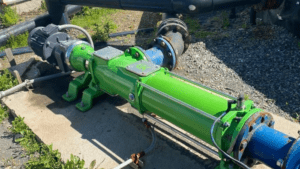
The continuous, reliable displacement of complex fluids is a cornerstone of modern industrial processing. When managing media characterised by extreme thixotropy, high solids content, or abrasive particles, selecting the correct pumping architecture is critical to avoiding structural component fatigue and accelerated internal wear.
Which industries benefit most from progressive cavity pumping systems?
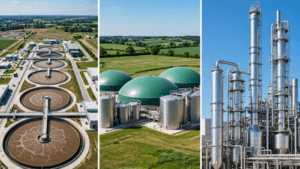
The continuous, reliable displacement of complex fluids is a cornerstone of modern industrial processing. When managing media characterised by extreme thixotropy, high solids content, or abrasive particles, selecting the correct pumping architecture is critical to avoiding structural component fatigue and accelerated internal wear.
Progressive Cavity Pump Installation, Service & Lifecycle Support: Why Kronoa is more than a pump supplier
Progressive Cavity Pump Installation, Service & Lifecycle Support: Why Kronoa